“I was just thinking, this Gustav is proof that there is a God in heaven,” Moore said, laughing. “To have it planned at the same time – that it would actually be on its way to New Orleans for day one of the Republican Convention, up in the Twin Cities – at the top of the Mississippi River.”Joseph Bottum notices something a bit more disconcerting...
After that comment, Moore backed off a bit and did say he hoped nobody got hurt and he hoped everybody is taking cover. However, he failed to make note of the $43.625 billion in damage the last hurricane to strike New Orleans caused – Hurricane Katrina in 2005 – and the billions of dollars the storm cost taxpayers.
8.30.2008
Moorisms
Further proof that the classless imbecility is not the exclusive property of Ann Coulter and others right-of-center:

8.29.2008
McCain/Palin '08
McCain has made a great choice for VP, the popular (90% approval rating!) pro-life governor of Alaska, Sarah Palin. Now I think I will be able to support the McCain campaign with fewer reservations. And this will certainly make this fall's campaign season more interesting!
Random tangent: Why doesn't The Associated Press come right out and explicitly express their support for the Democratic Party? It would make reading their "news" stories, like this one, much more bearable. Commenting on the selection of Palin, the AP writer says:
Random tangent: Why doesn't The Associated Press come right out and explicitly express their support for the Democratic Party? It would make reading their "news" stories, like this one, much more bearable. Commenting on the selection of Palin, the AP writer says:
At 44, Palin is a generation younger that Sen. Joseph Biden of Delaware, who is Barack Obama's running mate on the Democratic ticket. She is three years Obama's junior, as well — and McCain has made much in recent weeks of Obama's relative lack of experience in foreign policy and defense matters.The obvious implication being that McCain is being hypocritical, or contradicting himself somehow.
Palin
I think Gov. Sarah Palin is a great pick for VP. First, she's a true conservative. Second, she perfectly matches up with McCain's image as a reformer. She's done a lot to stop corruption in Alaska. Before the "Bridge to Nowhere" was repealed in Congress, she ordered it be stopped.
She is also a genuine pro-life candidate. Her 5th child was diagnosed with downs syndrome before she gave birth. She chose to keep her child and can be a proud example to the country.
Also, something interesting I read in Wikipedia: She hunts, eats moose hamburger, ice fishes, rides snowmobiles, and owns a float plane.[15][16] Palin holds a lifetime membership with the National Rifle Association."
This pick has energized me to support the ticket much more than previously. While I was hoping for a Romney pick, I think this pick is actually a better one. She's a solid conservative who doesn't have the baggage that Romney does. She also is real. Americans will be able to relate to her a lot more than the can to the two elitists in Biden and Obama.
Anyway, I look forward to others' thoughts.
8.28.2008
the heart of liberty
Next time you get pulled over for speeding, I recommend citing the following right, given to us by our mystical "Supreme Court":
"No officer, I was just defining my meaning of the universe in which I am the Supreme-King-mangod. Your pedestrian traffic laws do not apply to me"At the heart of liberty is the right to define one's own concept of existence, of meaning, of the universe, and of the mystery of human life.
Anthony Kennedy
Writing for the majority of the Supreme Court
Planned Parenthood v. Casey
(*Sorry if you've seen me mention this before, I think it's unbelievable enough to merit drawing everyone's attention to once and a while.)
8.27.2008
Distortions at the DNC
Driving last night, I tuned into NPR hoping to catch a few minutes of the Democratic National Convention. The speaker was the Governor of the State of Massachusetts, Deval Patrick, and he was talking about his family story and the American Dream. He moved rapidly from his personal success story to the crises he believes American society is facing today: the poor are worse off than ever, the middle class is one paycheck away from poverty, and other hyperbolic characterizations of American problems.
The problem with Governor Patrick's speech is very basic. The Governor is distorting the truth of things. It may or may not be intentional, but the pictures he paints of American society and the Republican candidate are inaccurate. The truth matters.
Look at his comments on John McCain and the Republicans:
The second paragraph is at best a half-truth. He conflates disagreements within the Republican party and mistakingly suggests there is one "Republican" opinion on how to govern. The truth is, Republicans have disagreed about the best way to govern for a while. This is why you see many conservatives (if not all) unhappy with GWB's presidency. George Bush may be fairly said to represent one type of Republican - but Bush is not a conservative. Bush never said he believed in limited government or fiscal restraint. He has been, from the start, a "compassionate conservative", which can be roughly defined as someone who believes in using government to pursue "conservative" ends.
Because of all these distortions, I was only able to stomach these 3-5 minutes of the speech. From some of the other commentary I've seen, it sounds like the rest of the convention was more of the same. These lies are another reason, apart from their policy preferences, that I cannot support the Democrats. Deval Patrick's speech may not have been very truthful, but I suppose it did serve well the cause of painting his opponents as hypocrites. So who cares if it isn't true!?
The problem with Governor Patrick's speech is very basic. The Governor is distorting the truth of things. It may or may not be intentional, but the pictures he paints of American society and the Republican candidate are inaccurate. The truth matters.
Look at his comments on John McCain and the Republicans:
Now, John McCain says he believes in education, too. But he is against fully funding No Child Left Behind, against fully funding Head Start, against hiring more teachers and wants to abolish the Department of Education. This should come as no surprise. John McCain is just more of the same say-one-thing-do-another crowd in the White House today.Unless the Governor is woefully ignorant, the first pargraph quoted above is entirely a lie. A cursory reading of John McCain's education policy website suffices to demonstrate this. He certainly doesn't have plans to abolish the Department of Education.
The same folks who say they believe in small government and fiscal restraint are responsible for the biggest expansion in the size of government and the size of the federal deficit in American history. The same folks, with John McCain leading the charge, who say they support seniors, want to privatize Social Security and put corporate pension funds up for grabs. The same folks who call themselves "compassionate conservatives" are the folks who abandoned all those people not only after Katrina, but before that storm. The American people have had enough.
The second paragraph is at best a half-truth. He conflates disagreements within the Republican party and mistakingly suggests there is one "Republican" opinion on how to govern. The truth is, Republicans have disagreed about the best way to govern for a while. This is why you see many conservatives (if not all) unhappy with GWB's presidency. George Bush may be fairly said to represent one type of Republican - but Bush is not a conservative. Bush never said he believed in limited government or fiscal restraint. He has been, from the start, a "compassionate conservative", which can be roughly defined as someone who believes in using government to pursue "conservative" ends.
Because of all these distortions, I was only able to stomach these 3-5 minutes of the speech. From some of the other commentary I've seen, it sounds like the rest of the convention was more of the same. These lies are another reason, apart from their policy preferences, that I cannot support the Democrats. Deval Patrick's speech may not have been very truthful, but I suppose it did serve well the cause of painting his opponents as hypocrites. So who cares if it isn't true!?
8.25.2008
classic environmentalist
"I think that we Prius owners need a dating/whatever program, to hook us up with other Prius owners," says one poster on Priuschat.com.
He admits it's half a joke, but says it "stems from my inability to look at people with gas-burning cars as attractive."
He admits it's half a joke, but says it "stems from my inability to look at people with gas-burning cars as attractive."
8.24.2008
The Good Life: Music
A key component of the good life is good music. The desire for good music is built into the human soul, in that part of the human being that longs for transcendence and the divine. Good music satisfies a part of this desire, because good music shares and reflects some part of God’s good nature. Indeed, good music can even lead people to God Himself - some people, after having experienced the grandeur and majesty of one of Bach’s symphonies profess a newfound faith in God; music can point beyond itself, to a reality of goodness and beauty that is otherworldly. This is the proper purpose of all music. The difficult part comes in discerning which music is good and which music is bad.
This discernment is an important task. Both Classical and Christian thinkers have recognized that music exerts a powerful influence on the human soul. Indeed, Plato thought that music was the most persuasive of educators, fundamentally shaping one’s temperament and desires. Therefore it is important to give careful consideration to listening habits and to learn to distinguish good music from bad music.
There is a temptation, especially these days, to say that musical taste is totally subjective. This position would deny that there is any such thing as music that is good independent of the opinion of the person experiencing it. In this view, musical taste is something like taste in ice cream – varies from person to person depending on environment and perhaps genes. Also, from this point of view, arguing about the goodness or badness of music makes no sense. What’s good for you is good for you, and what’s good for me is good for me. I think it is tempting to think this, but it is ultimately wrong.
Some persons face the opposite temptation, the temptation to absolutize musical taste, and to insist that good music is good music and reasonable people cannot disagree. Thus, good music is not only objective, but our ability know good music is also objective. I think this is also flawed.
As Aristotle taught us, the truth often exists in the mean between two extremes. I think this is the case with music. There is both an objective and a subjective component to music. It is like ice cream, in that musical taste can differ, but it is like mathematics in that some music is objectively bad and some objectively good. I do think that it is often difficult to see the truth associated with music. That is, in knowing good and bad music, we do not achieve the same certainty as we do with mathematics. Music is neither totally subjective, nor totally objective. In this way, it is like a lot of other knowledge, like morality, politics, and art.
I think this establishes the appropriate backdrop to begin to suggest some music that I believe can be properly called good. The first artist I would like to suggest is the Chicago jazz vocalist-extraordinaire, Kurt Elling.
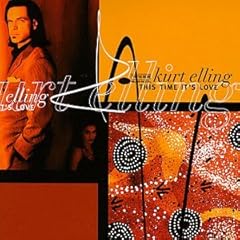 Elling is probably the most naturally talented vocalist I have ever heard. He has incredible range, pitch and tone. But you really have to hear him to understand what I’m talking about. I think his most accessible CD is his third outing as a professional, “This Time It’s Love”. Yeah, it’s a CD of love songs, but it really is something else. Elling is an artist that practices “vocalese,” or the art of singing instrumental jazz solos with uniquely composed lyrics. For example, “This Time It’s Love” includes a vocalese composition that was originally a Freddie Hubbard solo. As you can imagine, the Freddie Hubbard solo incorporates some difficult intervals and rhythmic turns
Other worthwhile highlights of Elling’s work include his music performed live at Chicago’s Green Mill night club. This album includes the noteworthy version of “My Foolish Heart”, where Elling incorporates a portion of St. John of The Cross’s poem from Dark Night of the Soul. Highly recommended. But the most surprising part is that Elling is just as capable live as he is in the studio. Because his pitch is so stable and his tone is mostly perfect, it's easy to think it must be doctored somehow in the production room. On this live CD, he proves that is not the case - it's all talent.
This discernment is an important task. Both Classical and Christian thinkers have recognized that music exerts a powerful influence on the human soul. Indeed, Plato thought that music was the most persuasive of educators, fundamentally shaping one’s temperament and desires. Therefore it is important to give careful consideration to listening habits and to learn to distinguish good music from bad music.
There is a temptation, especially these days, to say that musical taste is totally subjective. This position would deny that there is any such thing as music that is good independent of the opinion of the person experiencing it. In this view, musical taste is something like taste in ice cream – varies from person to person depending on environment and perhaps genes. Also, from this point of view, arguing about the goodness or badness of music makes no sense. What’s good for you is good for you, and what’s good for me is good for me. I think it is tempting to think this, but it is ultimately wrong.
Some persons face the opposite temptation, the temptation to absolutize musical taste, and to insist that good music is good music and reasonable people cannot disagree. Thus, good music is not only objective, but our ability know good music is also objective. I think this is also flawed.
As Aristotle taught us, the truth often exists in the mean between two extremes. I think this is the case with music. There is both an objective and a subjective component to music. It is like ice cream, in that musical taste can differ, but it is like mathematics in that some music is objectively bad and some objectively good. I do think that it is often difficult to see the truth associated with music. That is, in knowing good and bad music, we do not achieve the same certainty as we do with mathematics. Music is neither totally subjective, nor totally objective. In this way, it is like a lot of other knowledge, like morality, politics, and art.
I think this establishes the appropriate backdrop to begin to suggest some music that I believe can be properly called good. The first artist I would like to suggest is the Chicago jazz vocalist-extraordinaire, Kurt Elling.
Elling is probably the most naturally talented vocalist I have ever heard. He has incredible range, pitch and tone. But you really have to hear him to understand what I’m talking about. I think his most accessible CD is his third outing as a professional, “This Time It’s Love”. Yeah, it’s a CD of love songs, but it really is something else. Elling is an artist that practices “vocalese,” or the art of singing instrumental jazz solos with uniquely composed lyrics. For example, “This Time It’s Love” includes a vocalese composition that was originally a Freddie Hubbard solo. As you can imagine, the Freddie Hubbard solo incorporates some difficult intervals and rhythmic turns Other worthwhile highlights of Elling’s work include his music performed live at Chicago’s Green Mill night club. This album includes the noteworthy version of “My Foolish Heart”, where Elling incorporates a portion of St. John of The Cross’s poem from Dark Night of the Soul. Highly recommended. But the most surprising part is that Elling is just as capable live as he is in the studio. Because his pitch is so stable and his tone is mostly perfect, it's easy to think it must be doctored somehow in the production room. On this live CD, he proves that is not the case - it's all talent.
8.21.2008
the oil rapture
What do you think about the end of the world? But more seriously, what would you say to someone who believes this stuff? How do you convince them otherwise?
duty to vote?
You've probably heard, Archbishop Charles Chaput has a new book. You're also probably, like me, looking forward to reading it soon. The book is titled, "Render Unto Caesar," and addresses many of the same subjects addressed on this blog and others. The good Archbishop has recently been interviewed by Hugh Hewitt, a radio talk show host, and the conversation is well worth reading. I found this to be particularly provocative, especially for those who think abstaining from voting is the only legitimate option for faithful Catholics. In particular, Hewitt asks the Archbishop:
HH: Is it part of the duty of a good Catholic to vote if they’re allowed to vote?I should say that I do not think what the Archbishop is saying here is that abstaining from voting is an absolutely illegitimate option, although it sounds like it. SO what is he saying? What do you think?
CC: Oh, I think it’s a duty of a good Catholic not only to vote, but to know the issues. It’s more than just voting. You know, voting is kind of a minimal thing, but a vote is foolish if it’s not based on knowledge. So we have to know candidates, we have to be aware of party platforms, we have to be really engaged on the issues or our votes will be wasted, and maybe even turned in the wrong direction. So voting is what all good citizens do. And another point I’d like to mention is patriotism is considered a virtue not only by Catholics, but by Christians, and to love our country, which is a broader sense of loving our neighbor. And when I grew up and studied the Catechism, it was always associated with what they called filial piety, which is love of our parents, love of our family. And we’re required to see the broader community as an extension of our family. And so it’s…patriotism is a virtue, it’s something we should be proud of. And those who are good citizens are good Christians.
8.19.2008
abyssmal
I think this is one of the worst movie scenes of all time:
Garden State occasioned my favorite line of movie criticism ever, issued by Jonathan V. Last, I believe:
"Never before has a film tried to dive so deep into so shallow a pool."
Garden State occasioned my favorite line of movie criticism ever, issued by Jonathan V. Last, I believe:
"Never before has a film tried to dive so deep into so shallow a pool."
There is an interesting discussion about Catholicism and postmodernism going on at Kyle's page. Check it out.
8.18.2008
political courage and the Democrats
/* possible partisan hackery alert
I think people are generally wrong to trust the Democrats to make significant and effective changes in American policy, domestic or otherwise. They repeatedly demonstrate they have no interest in making tough choices. In fact, they may be opposed to it in principle. Significantly changing policy would require conviction, and the Democrats are only convicted insofar as the popular will is convicted, and this is a rare circumstance.
Even a successful policy change is in some ways a loss for the Democrats, because after the policy is implemented and assuming it is at least somewhat successful, there will be less to give to the people. Therefore there will be less reason to keep the Democrats in power. Say, for example, the Democrats successfully implemented a national health care program. What happens after this starts running smoothly? What issue is left to fight for? What will be the party's raison d'etre? Successful maintenance of bureaucracy is not the best campaign platform.
Perhaps the most egregious example of Democratic inaction is their unwillingness to follow through on their promises about Iraq. They were elected in a landslide in 2006 to get us out of Iraq, and they did not have the political courage to do it. They capitulated to Bush, and they are given a pass by many people for no good reason. The Democrats could have us out of Iraq tomorrow. They control the war because they control the funding for the war. Because there is the chance that pulling out of Iraq would result in some type of disaster, and that they might be held responsible, they have avoided the responsibility altogether. They are concerned only about power. This came up in the conversation Prof. Andrew Bacevich had with Bill Moyers the other day (HT: Rod):
I'd add that the Republicans are not exempt from this criticism. Political courage is a virtue largely absent from American politics today; but I do think the Republicans, in this regard, are better than the Democrats. Indeed, this is one of the things I admire about President Bush - he never sold himself as a classically republican(small r) conservative - and he followed through on all of his policy propositions, as wrongheaded as some of them may have been. At least he had the courage to do so.
A good statesman must have both good ideas and the courage to act. Know any good statesmen?
I think people are generally wrong to trust the Democrats to make significant and effective changes in American policy, domestic or otherwise. They repeatedly demonstrate they have no interest in making tough choices. In fact, they may be opposed to it in principle. Significantly changing policy would require conviction, and the Democrats are only convicted insofar as the popular will is convicted, and this is a rare circumstance.
Even a successful policy change is in some ways a loss for the Democrats, because after the policy is implemented and assuming it is at least somewhat successful, there will be less to give to the people. Therefore there will be less reason to keep the Democrats in power. Say, for example, the Democrats successfully implemented a national health care program. What happens after this starts running smoothly? What issue is left to fight for? What will be the party's raison d'etre? Successful maintenance of bureaucracy is not the best campaign platform.
Perhaps the most egregious example of Democratic inaction is their unwillingness to follow through on their promises about Iraq. They were elected in a landslide in 2006 to get us out of Iraq, and they did not have the political courage to do it. They capitulated to Bush, and they are given a pass by many people for no good reason. The Democrats could have us out of Iraq tomorrow. They control the war because they control the funding for the war. Because there is the chance that pulling out of Iraq would result in some type of disaster, and that they might be held responsible, they have avoided the responsibility altogether. They are concerned only about power. This came up in the conversation Prof. Andrew Bacevich had with Bill Moyers the other day (HT: Rod):
BILL MOYERS: And, yet, you say that the prime example of political dysfunction today is the Democratic Party in relation to Iraq.end hackery */
ANDREW BACEVICH: Well, I may be a conservative, but I can assure you that, in November of 2006, I voted for every Democrat I could possibly come close to. And I did because the Democratic Party, speaking with one voice, at that time, said that, "Elect us. Give us power in the Congress, and we will end the Iraq War."
And the American people, at that point, adamantly tired of this war, gave power to the Democrats in Congress. And they absolutely, totally, completely failed to follow through on their commitment. Now, there was a lot of posturing. But, really, the record of the Democratic Congress over the past two years has been - one in which, substantively, all they have done is to appropriate the additional money that enables President Bush to continue that war.
BILL MOYERS: And you say the promises of Harry Reid and Nancy Pelosi prove to be empty. Reid and Pelosi's commitment to forcing a change in policy took a backseat to their concern to protect the Democratic majority.
ANDREW BACEVICH: Could anybody disagree with that?
I'd add that the Republicans are not exempt from this criticism. Political courage is a virtue largely absent from American politics today; but I do think the Republicans, in this regard, are better than the Democrats. Indeed, this is one of the things I admire about President Bush - he never sold himself as a classically republican(small r) conservative - and he followed through on all of his policy propositions, as wrongheaded as some of them may have been. At least he had the courage to do so.
A good statesman must have both good ideas and the courage to act. Know any good statesmen?
8.16.2008
emotion as virtue
An excellent essay about how modern society has made emotion a virtue is available via Arts and Letters Daily.
Compassion today is widely regarded as a good, and those who display it as good people. Indeed, many see compassion or some related virtue (e.g., empathy) as the core of goodness, as the virtue of virtues. It's not only a private but also a public virtue, much cherished in our politicians. Even in international affairs, of all places, the apex of virtuous action is widely taken to be 'humanitarian intervention' or the use of force to relieve suffering. Compassion has not always enjoyed so lofty and uncontroversial a status; will it someday once again relinquish it?
That compassion is natural to human beings there is no question. But does it pertain to our higher or to our lower natures? As even or precisely those who take compassion for a virtue acknowledge, it is an emotion. Can an emotion be a virtue? Yes, if the keynote of virtue is naturalness in the sense of spontaneity or authenticity. No, if what defines virtue is the perfection of our nature through the triumph of reason over passion. For this reason the long history of thought about compassion (stretching back at least 2,500 years now) has revolved around just this issue.
8.15.2008
bad news for America
Here's a good reason to think the United States is in rough shape... Apparently, 47% of Americans don't believe in free speech. It would be interesting if they could correlate this data with political party membership...
With an Obama presidency, we will likely see a revival of the "Fairness doctrine," especially if the idea has such popular support.
With an Obama presidency, we will likely see a revival of the "Fairness doctrine," especially if the idea has such popular support.
8.14.2008
bad big banks?
Someone sent this link to my junk email list at work, along with a rant lamenting evil big banks. The website actually proposes an interesting idea:
The fastest way to kick-start the shift away from a centralized economy is to stop financing the big banks—and through them, the activities they are financing—and to switch your bank deposits to a well-managed, community bank or credit union. In fact, it's the single greatest point of leverage you have as a consumer.Considering I know little to nothing about finance, business, or the practical aspects of the economy, I'm left wondering whether there is any truth to this statement. Should I stay away from big banks? I have used Bank of America for a number of years now, for all sorts of services. I've never had any problems and they make banking very convenient for me. It is this convenience that has prevented me from changing banks. Do I have a moral obligation to change to a smaller bank? Would it be better for the economy? If so, I'd probably change banks. That said, part of my intuition says that this is just reactionary opposition to large corporations and the global economy. Can anyone fill me in?
8.13.2008
a preference for McCain
I normally don’t like to talk about my specific political preferences. I find that more often than not, people are distracted when the word “Republican” or “Democrat” is injected into a conversation. They hear one of those buzzwords and then they hear nothing else. Their mind associates the word with feelings, good or bad. The feelings take over the rational part of the mind and there is no conversation to be had, only an awkward back and forth that usually involves a serious attempt to change the subject. Of course, sometimes this problem can be overcome, but usually not. I therefore avoid mentioning the R-word or the D-word until some basic common ground is established.
That said, I have recently argued that the upfront disclosure of political preferences is a good thing. I then realized that I haven’t really disclosed such information in this forum. So, I will attempt to make such a disclosure right now.
I will probably hold my nose and vote for John McCain this fall. I believe republican (small 'r'), limited government is in the best interest of the country. McCain at least occasionally agrees with this idea. Obama, never.
Even if I don’t vote for McCain, I will be actively campaigning against an Obama presidency. While Obama is a charismatic, even possibly hope-inducing kind of fellow, I do not think these qualities alone are those that make a good president. A good president will have good ideas; he will practice prudence; he will lead by the example of his good character. But if a president doesn’t have, in the first place, good ideas, then his other virtues do not matter so much. Politics is, in the first place, about ideas. Politics is not primarily about charisma or smiles or ability to lead (although the latter is certainly a big component). Thus, one must consider the ideas of the candidate as being more important than whether or not he or she is a nice guy. A president’s ideas will be of more consequence than his personality.
And I think Obama’s actual policy ideas are, for the most part, bad ideas. John McCain’s ideas aren’t much better. But they are slightly better. And sometimes, in politics, this is all we can expect to get. Additionally, we should not be surprised when the candidates of two national parties do not line up with our idiosyncratic policy preferences. Obama and McCain represent a nation of over 300 million people. You shouldn’t agree with them about everything – such agreement would be unhealthy for American political life.
I should add that the best reason to vote for John McCain is the Supreme Court. This next term, it is virtually guaranteed that a few key justices will be retiring. They will be replaced by the new president. These new justices will control the jurisprudential character of the court for probably the next 30-50 years. With a president Obama, there is absolutely no chance of getting a justice who would vote to overturn Roe v. Wade. With a president McCain, there is a good chance of such a thing. It’s not a sure-shot, but it is definitely non-zero and has many significant liberal thinkers worried, including law Prof. Jeffrey Toobin.
There are other reasons to vote for McCain, but I think the Supreme Court is the best one. Without it, I would probably not vote for him.
8.12.2008
considering traditional and personalized wedding vows
Here is a very interesting take on the significance of traditional wedding vows. The argument:
It would be hard to exaggerate the symbolic importance of this shift toward self-composed vows. The old vows were created by society and presented to the couple, signifying the goal of conforming the couple to marriage. The new vows are created by the couple and presented to society, signifying the goal of conforming marriage to the couple. The two approaches reflect strikingly divergent views of marriage and of reality itself.Traditional vows are clearly the way to go.
In one view, the vow is prior to the couple. The vow exists on its own, exerting social and sacred authority that is independent of the couple. In this sense, the vow helps to create the couple. For in making the same promise that others before them have made, and that others after them will make, the couple vows on their wedding day to become accountable to an ideal of marriage that is outside of them and bigger than they are.
In the new view, the couple is prior to the promise. The vow is not an external reality, like gravity or the weather, but instead a subjective projection, deriving its meaning solely from the couple. From this perspective, the couple approaches the vow like a painter approaches a canvas. Rather than the vow creating the couple, the couple creates the vow. As a result, each marriage becomes unique, like a painting or a snowflake.
With this one procedural change in the making and exchanging of vows, a ceremony of continuity and idealized forms is displaced by a ceremony of creativity and personal expression. Subject and object trade places. Theologically, the transcendent becomes mundane as couples, in effect, become the gods of their own marriages. A reality in which the marriage is larger than the couple is replaced by a reality in which the couple is larger than the marriage.
Of course, many of the motivating ideas behind the new vows are understandable and even admirable. Couples want to avoid hypocrisy. They want the ceremony to be dramatic and personally meaningful. In part, the new vows represent a practical response to the growing phenomenon of mixed-tradition marriages.
But the essence of this change reflects a dramatic shrinking of our idea of marriage. With the new vows, the robust expectation of marital permanence shrinks to a frail, often unstated hope. Marriage as a vital communal institution shrinks to marriage as a purely private relationship. Marriage as something that defines me shrinks to something that I define.
Finally, as the idea of marriage gets weaker, so does the reality. In this sense, the new vows are important philosophical authorizations for our divorce culture. They are both minor causes and revealing results of a society in which marriage as an institution is decomposing before our eyes.
8.08.2008
wisdom found on the internet
Zippy says: "The more committed one becomes to making a manifestly indefensible choice, the more intransigently one will insist that any choice is defensible. "
Subscribe to:
Posts (Atom)